Every investment carries risk. Dubai property is no different.
The investors who succeed in Dubai are not the ones who ignore the risks. They are the ones who understood them clearly and took deliberate steps to manage each one.
This guide gives you an honest, complete picture of the risks of buying property in Dubai as a Delhi-based investor. More importantly, it shows you exactly how to avoid each one.
Why an Honest Risk Assessment Matters
Dubai’s property market has genuinely strong fundamentals in 2026. Rental yields of 8 to 12%, zero tax, and flexible payment plans are real and well-documented.
But no market is risk-free. Buyers who enter without understanding the risks tend to make avoidable mistakes. These include choosing unverified developers, misunderstanding payment obligations, or buying in low-demand areas with poor resale prospects.
Understanding the risks puts you in control. It helps you ask the right questions, choose the right developer, and structure your investment for the best possible outcome.
Risk 1: Developer Risk and Project Delays
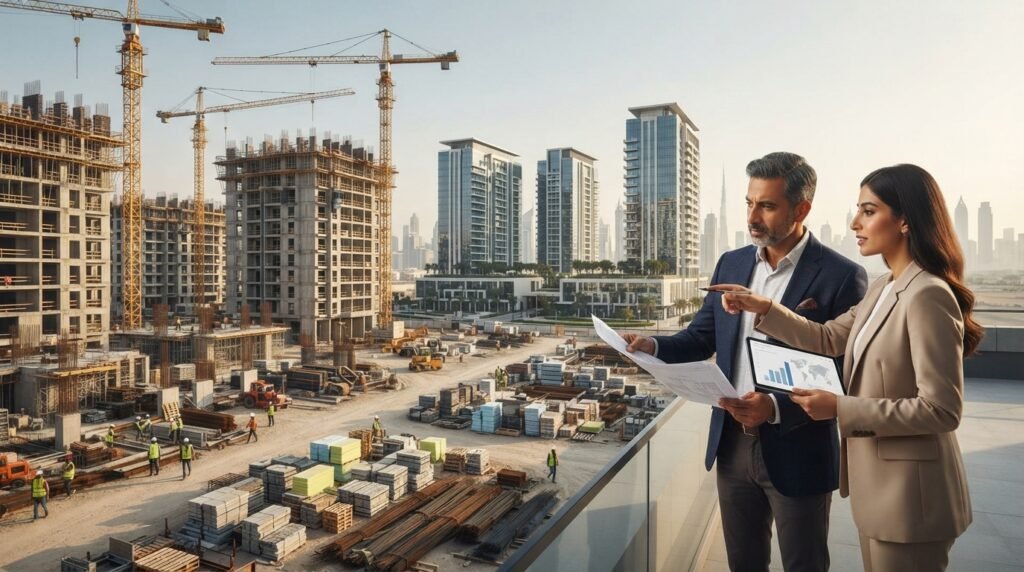
This is the most commonly cited risk among first-time overseas buyers. Off-plan property means you are purchasing something that does not yet exist. What if the developer delays, or worse, fails to deliver?
The Reality
Project delays do happen in Dubai, as they do in any real estate market. However, Dubai’s regulatory framework significantly limits the damage a delay can cause to investors.
RERA requires all developers to hold buyer payments in escrow accounts during construction. Funds are released to the developer only when verified construction milestones are reached. This means your money is protected even if a project runs late.
In the event of significant delays or cancellations, RERA provides a formal dispute resolution process. Buyers can file complaints, seek refunds, or pursue compensation through the Real Estate Dispute Settlement Centre.
How to Avoid It
Choose developers with a strong delivery track record. Emaar, Sobha, DAMAC, Nakheel, and Binghatti all have long histories of completed projects. Verify any developer through the DLD’s official portal before committing.
Buying from developers showcased at a verified expo adds another layer of protection. All developers featured at the Dubai Property Expo Delhi are RERA-registered and vetted by the advisory team.
Risk 2: Buying in a Low-Demand Location
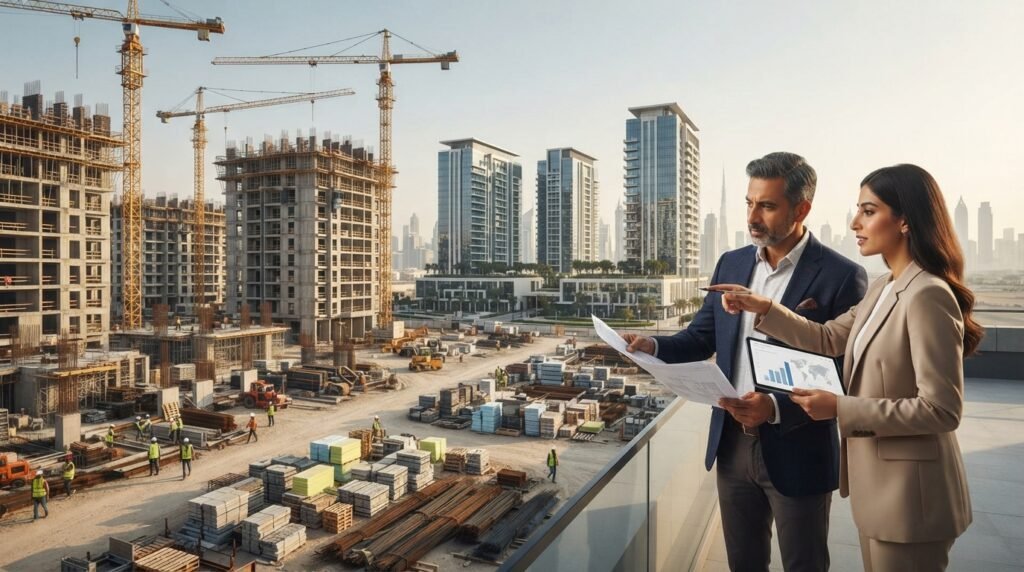
Not all Dubai communities perform equally. Some areas have strong rental demand, high occupancy rates, and growing capital values. Others have oversupply issues, weaker tenant demand, and slower price growth.
The Reality
Dubai’s property market is not uniform. A studio in Jumeirah Village Circle with 95% occupancy and a 10% yield is a very different investment from a studio in a fringe community with 60% occupancy and a 5% yield.
Location risk is real, and it is the most common mistake made by investors who buy based on price alone rather than demand fundamentals.
How to Avoid It
Focus on established freehold communities with a proven rental track record. JVC, Dubai Marina, Business Bay, JLT, and Downtown Dubai consistently demonstrate strong occupancy and tenant demand.
Avoid buying in very new or remote communities unless you have a specific long-term capital appreciation thesis backed by infrastructure development plans.
Ask developers at the expo to show you occupancy data and average rental rates for their completed projects in the same community. This is public information, and any reputable developer will provide it.
Risk 3: Currency Risk for Indian Investors
The AED is pegged to the USD. The INR is not. Over time, the rupee tends to depreciate against the dollar, which means your Dubai property becomes more valuable in rupee terms as the INR weakens.
However, currency movement works both ways in the short term.
The Reality
For most Delhi investors, currency risk actually works in their favour over the medium to long term. The historical trend of INR depreciation against USD means rupee-denominated investors tend to see their Dubai asset appreciate in INR terms simply due to exchange rate movement.
The risk arises if you need to liquidate quickly during a period of temporary rupee strength, or if your personal financial position is heavily rupee-denominated and you struggle to meet installment payments in AED.
How to Avoid It
Plan your investment horizon carefully. Dubai property is a medium to long-term investment. Investors who commit to a 5 to 7 year horizon benefit from both rental income and the historical tendency of INR to weaken against USD-pegged assets.
Ensure your installment payment capacity is not entirely dependent on a single INR income source. Diversifying your income or maintaining a UAE currency buffer helps manage short-term exchange rate volatility.
Risk 4: Liquidity Risk
Property anywhere in the world is an illiquid asset. You cannot sell it in a day the way you can sell shares or mutual funds. Dubai is no exception.
The Reality
Resale timelines for Dubai property vary significantly. Ready properties in high-demand communities like Dubai Marina or Downtown can sell within weeks in a strong market. Off-plan units being resold before completion take longer and depend heavily on market conditions at the time.
In a weaker market cycle, selling quickly may require accepting a price below your target.
How to Avoid It
Never invest money in Dubai property that you might urgently need within 1 to 2 years. Treat it as a medium to long-term capital allocation.
Buy in high-demand communities with established resale markets. The more liquid the community, the faster your exit when the time comes.
If you are buying off-plan with resale in mind, check whether the developer’s SPA permits resale before handover. Most do, but some have restrictions during early construction phases.
Risk 5: Misunderstanding Your Indian Tax and Legal Obligations

This risk is specific to Delhi and Indian investors. Many buyers focus entirely on the Dubai side of the transaction and overlook their obligations back in India.
The Reality
Indian residents who buy Dubai property must comply with RBI LRS rules, FEMA guidelines, and Income Tax Act disclosure requirements. Rental income must be declared in your ITR. The foreign asset must be reported under Schedule FA.
Failure to comply is not a minor oversight. The Black Money Act treats undisclosed foreign assets very seriously. Penalties are significant.
How to Avoid It
Engage a CA who specialies in international taxation before you purchase. Ensure your LRS remittance is properly documented at your Indian bank. File Schedule FA correctly in your ITR every year.
For a full breakdown of what Indian tax laws require from Dubai property owners, read our dedicated article on property tax in Dubai for Delhi investors.
Risk 6: Off-Plan Payment Commitment Risk
Off-plan payment plans feel comfortable at launch. 10% now, small installments over 3 to 5 years. But life changes. Income changes. What happens if you cannot meet a payment?
The Reality
Developers treat missed payments seriously. Most SPAs include penalty clauses for late payment, typically 1 to 2% of the outstanding amount per month. Persistent non-payment can lead to the developer invoking cancellation clauses, potentially forfeiting a portion of payments already made.
This is not a Dubai-specific risk. It is standard in any installment-based purchase. But it catches buyers who overextend themselves.
How to Avoid It
Only commit to an off-plan payment plan that your finances can comfortably sustain even if your income drops by 20 to 30%. Budget conservatively.
Review the SPA penalty and cancellation clauses before signing. Understand exactly what happens in a worst-case payment scenario. Ask the developer directly what grace periods and remedies exist before penalties apply.
Risk 7: Buying Without Verified Developer Access
Delhi investors researching Dubai property online encounter hundreds of agents, portals, and brokers. Not all of them represent developers accurately. Some promote off-market deals that do not exist. Others charge inflated commissions.
The Reality
The risk of buying through an unverified intermediary is real. Investors have paid booking deposits to agents who were not authorized to collect them. Others have been presented with inflated pricing that a direct developer channel would not support.
How to Avoid It
Always buy directly from the developer or through a verified, licensed agent. Confirm the developer’s RERA registration through the DLD portal. Never pay a booking deposit without receiving a developer-issued receipt.
Attending a live property expo is one of the safest ways to buy Dubai property from India. You meet the actual developer representatives, verify credentials in person, and receive developer-issued documentation from the first contact.
The Safest Way to Enter the Dubai Market from Delhi
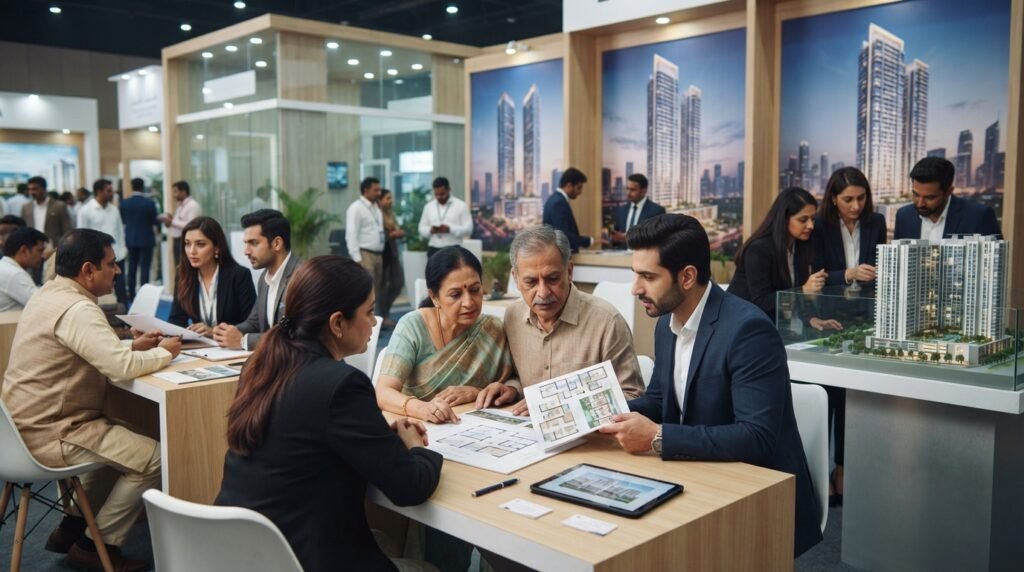
Every risk above has a clear solution. The pattern is consistent: buy from verified developers, in proven communities, with a realistic financial plan, and full compliance with Indian legal obligations.
The Dubai Property Expo Delhi is specifically designed to eliminate the biggest risks for Indian buyers. Every developer is RERA-verified. Every project is curated by an experienced advisory team. Legal and tax guidance is available on site.
You meet developers face to face. You review documentation in real time. You get answers to the specific questions your situation demands.
This is fundamentally safer than buying remotely through an agent you found online.
Frequently Asked Questions
Is buying property in Dubai safe for Indian investors?
Yes, when done correctly. Dubai’s RERA framework, escrow protections, and DLD registration system make it one of the most regulated overseas markets available to Indian buyers. The key is choosing verified developers and complying with Indian legal requirements.
What happens if my Dubai developer goes bankrupt?
RERA’s escrow system means your funds are held separately from the developer’s operating accounts. In cases of developer insolvency, RERA oversees the project and buyer funds. Government-linked developers like Emaar and Nakheel carry essentially zero insolvency risk.
Can I lose my entire investment in Dubai property?
In a well-executed purchase from a RERA-registered developer in a strong community, losing your entire investment is extremely unlikely. The primary risks are delays, temporary value fluctuations, and liquidity constraints, not total loss.
What is the biggest mistake Indian buyers make in Dubai?
Buying based on price alone without researching community demand fundamentals. A cheap unit in a low-occupancy area delivers poor returns and is difficult to resell. Location quality matters more than entry price.
How do I verify a Dubai developer before buying?
Search the developer on the Dubai Land Department’s official portal at dubailand.gov.ae. All RERA-registered developers and their active projects are listed there. Also, check their completed project history and ask for references from past buyers.
Ready to Invest Safely in Dubai from Delhi?
Now you know the real risks of buying property in Dubai and exactly how to manage each one. The risks are real but manageable. The safeguards are strong. The returns justify the effort.
The smartest way to take your first step is through a verified, face-to-face environment where every developer is checked, every project is curated, and expert advisors are available to guide your specific situation.
The Dubai Property Expo Delhi is that environment. Over 100 curated projects, RERA-verified developers, and one-on-one advisory sessions designed for Delhi Investors.
Register free today at dubaipropertyexpodelhi.co.in and invest with confidence.